
I keep seeing people drop their jaws when I tell them this. A free, open-source model just knocked Claude out of the number one spot for coding, and you can run it on your own computer in under 4 gigs of graphics memory. If you're new to this, that's less graphics memory than most gaming laptops come with.
Normally, a model like this needs a whole rack of data center GPUs because the entire model has to sit in graphics memory at once. That's the rule. You want to run a big brain, you need a big wallet and a server room. But that rule just got broken.
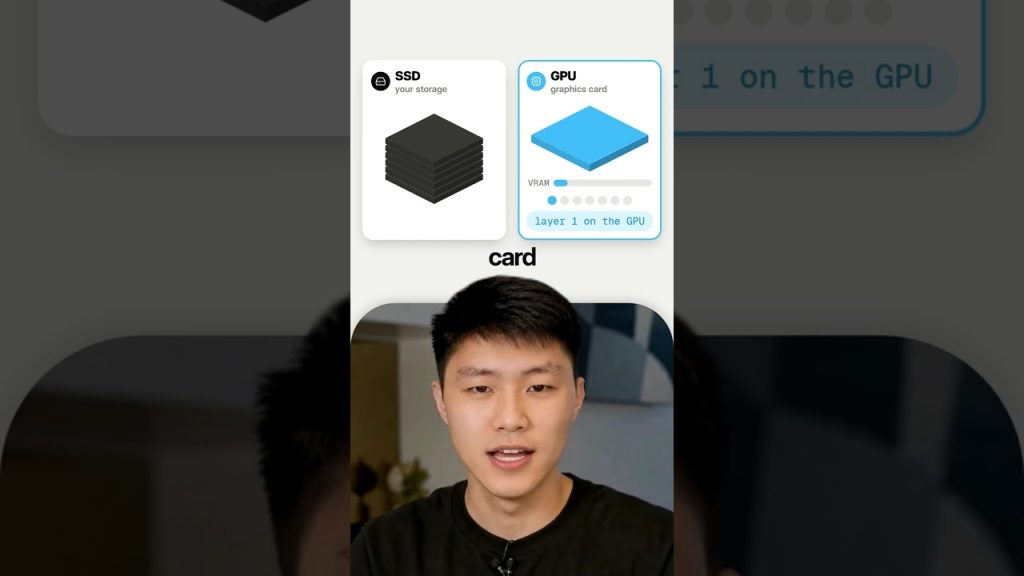
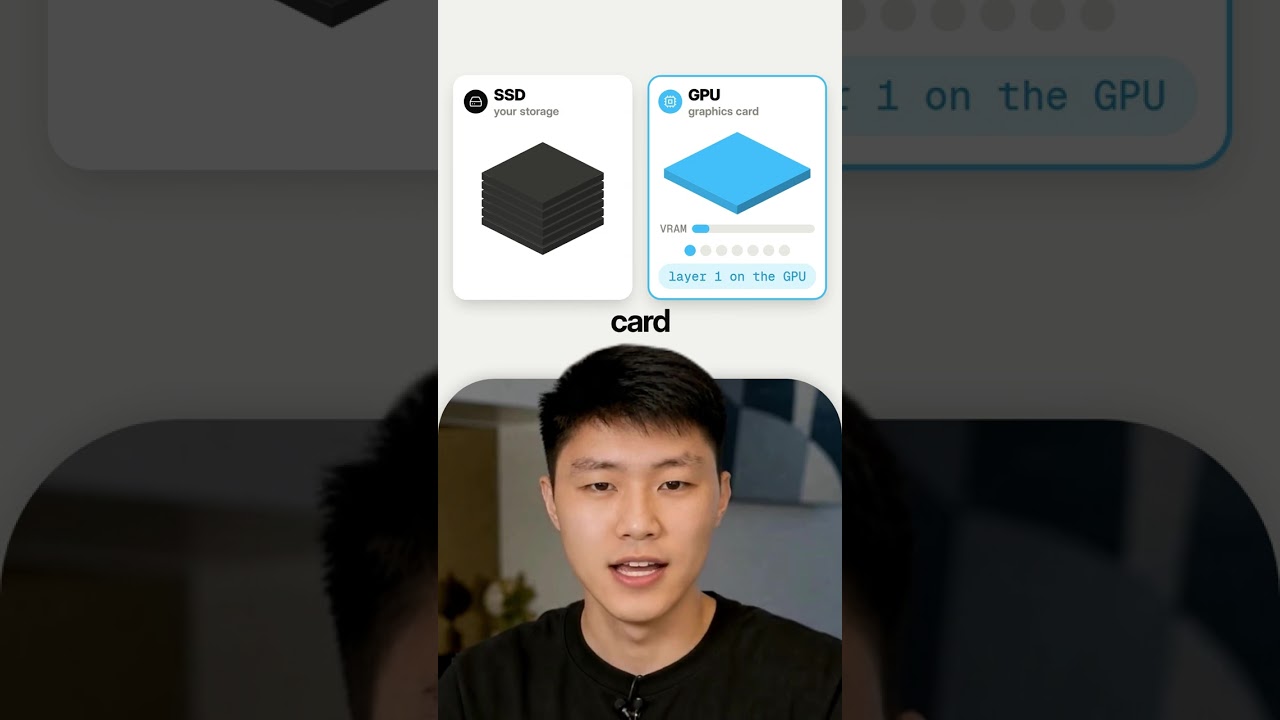
A model is basically a stack of layers, and your question passes through them in order. One after the other. So this tool keeps the whole model on your SSD and moves just one layer onto your graphics card. That layer does its job, gets cleared out, and the next one moves in again and again. Then the next. Then the next.
That means your graphics card isn't the limit anymore. Your storage is.
How a Single Layer Changes Everything
Most people think about AI models as one giant block of math that needs to be loaded all at once. That's why we've been told for years that running a frontier model locally requires a $10,000 rig with multiple GPUs. The entire model sits in VRAM, waiting for your prompt. Every parameter, every weight, just sitting there burning memory even when it's not actively being used.
The approach here is different. Instead of loading the whole model, you load just one layer at a time. The layer processes your input, hands off its output to the next layer, and then gets wiped from memory. The next layer slides in, does its work, gets cleared. This repeats until every layer has had its turn.
It's like reading a massive reference book one page at a time instead of photocopying the entire thing and spreading it across your desk. You only need space for the page you're currently reading.
The trade-off is speed. Moving layers on and off the graphics card takes time. But the trade-off that disappears is cost. No subscription. No API credits. Not a single dollar.
The Bakery Website Test
I wanted to see if this actually works in practice, not just in theory. So I asked it to build a full landing page for a local bakery. The kind of task that would normally have me reaching for Claude or paying per token on some hosted service.
I left it running overnight.
In the morning, I had a clean, working website. Not a half-finished template. Not broken code that needs an hour of debugging. A real landing page that a bakery could actually use.
That's the moment where the math stops being theoretical. A model that beat Claude at building websites is now running on your own computer for free. The same machine you use to check email and watch videos is now capable of producing production-quality code while you sleep.
No subscription. No credits. No rate limits. No one watching your prompts. Just your hardware, your storage, and a model that doesn't care how many times you ask it to iterate.
Why Storage Becomes Your New Bottleneck
When your graphics card stops being the gatekeeper, something else takes its place. In this case, it's your SSD.
The model lives on your drive. Every layer gets pulled from storage, processed, and swapped out. That means two things matter now: how fast your SSD can read, and how much free space you have.
A decent NVMe drive makes a real difference here. The faster your storage can feed layers to your GPU, the less time you spend waiting between processing steps. It's still slower than having everything in VRAM at once, but the gap shrinks with better hardware.
The bigger point is that storage is cheap. A 2TB NVMe drive costs a fraction of what a data center GPU costs. And you probably already have one in your computer. The barrier to entry shifted from "do you have a $5,000 graphics card" to "do you have enough free disk space."
That's a completely different universe of accessibility.
What This Means for the Hosted Model Business
Every major AI company charges for access to their best models. Monthly subscriptions, per-token pricing, credit systems that run out faster than you expect. The business model depends on the fact that running these models is expensive and complicated, so you pay them to handle it.
When a model that beats Claude can run on a gaming laptop for free, that value proposition gets shaky.
I'm not saying hosted services are going away. They're still faster. They still handle the setup and maintenance. For teams that need instant responses and don't want to think about infrastructure, paying makes sense.
But for individuals, for hobbyists, for anyone who can wait a few hours for a result, the calculus changed. Why pay per prompt when your own computer can do the work overnight? Why hand over your code and your data to a third party when the same quality model runs locally?
The open-source model didn't just beat Claude on a benchmark. It beat the assumption that frontier AI has to live in someone else's data center.
The Setup Isn't Complicated
People hear "run a model locally" and picture command lines, dependency hell, and three hours of troubleshooting environment variables. That used to be fair. A year ago, getting a local model running was a project in itself.
The tooling has improved dramatically. The process now is closer to downloading an application, pointing it at the model file, and hitting run. The layer-swapping happens automatically. You don't need to configure batch sizes or understand CUDA memory allocation.
The main thing you need is the model file itself and enough free storage space. The software handles the rest. It decides which layer to load when, manages the memory clearing, and reassembles the output at the end.
If you've ever installed a game from Steam, you have the technical skills required here. The barrier is knowledge, not complexity. Once you see it done once, it's obvious.
Key Takeaways
- A free open-source model took the number one coding spot from Claude and runs locally on under 4GB of VRAM, less than most gaming laptops have.
- The trick is loading one model layer at a time from your SSD instead of keeping the entire model in graphics memory, so your storage becomes the limit, not your GPU.
- In a real test, the model built a complete bakery landing page overnight with no subscription, no API credits, and zero dollars spent.
- This shifts the cost equation for individuals: why pay per prompt when your own hardware can produce the same quality output while you sleep?
- Setup is straightforward enough that anyone who can install an application can get this running, no deep technical knowledge required.
I've been running models locally for a while now, and this is the first time the quality gap between local and hosted genuinely disappeared for a task I care about. Not "almost as good." Not "good enough for a demo." Actually competitive with the best paid option available.
The model that beat Claude is sitting on a hard drive somewhere, waiting for someone to download it and put it to work. No gatekeepers, no pricing tiers, no terms of service telling you what you can and can't build. Just a stack of layers and a storage drive, trading places one at a time until your idea turns into something real.